

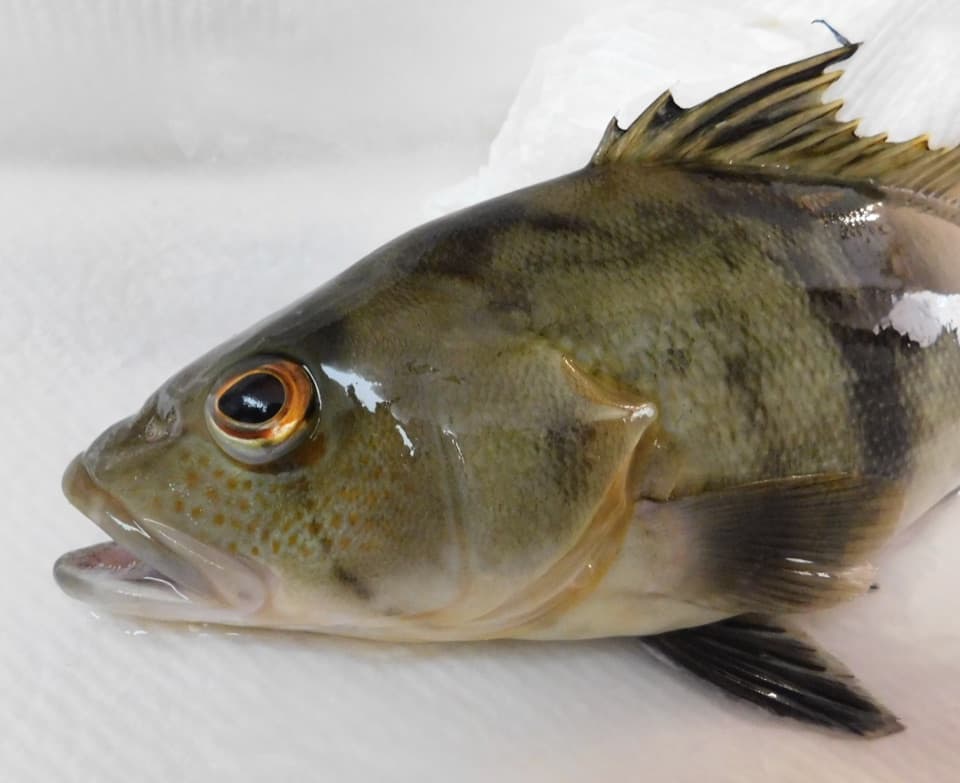
Photo: Ruff tuff cream puff · CC0 · 1/3
Barred Sand Bass
Paralabrax nebulifer
Close cousin of the kelp bass that favors open sand transitions, channel edges, and harbor entrances rather than dense kelp beds.
Monthly Seasonality & Run Timing
12-Month CalendarDeep water winter dormancy.
Cold water.
Slow.
Movement toward sandy drop-offs near jetties.
Active around harbor mouths and channel bottoms.
Summer spawning aggregations on sandy transitions.
Heavy feeding on anchovies, squid, and crabs.
Prime channel-flank jetty action.
Post-spawn dispersal.
Solid action on bottom rigs.
Retreat to deeper coastal sand flats.
Winter lull.
Feeds predominantly in the bottom habitat.
Active feeding thermal band in SoCal.
Peak bite frequency during tide movement.
Optimal lighting and foraging activity.
California Fish & Wildlife Regulations
14 inches minimum total length (or 10 inches alternate length).
5 fish per day in combination of Kelp Bass, Barred Sand Bass, and Spotted Sand Bass.
- 14 CCR § 28.30:View official California Department of Fish and Wildlife regulation ↗· reviewed 2026-08-28
Recommended Terminal Rigs for Barred Sand Bass
Tested terminal configurations, mainline, leader diameters, and hook sizes.
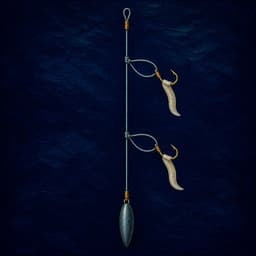
Dropper Loop Bottom Rig
Single or double dropper loop holding bait 6–12 inches above sandy bottom near rock transitions.
Where to Fish for Barred Sand Bass in SoCal
2 Piers & Jetties in Pier Scout“The local report identifies bass around the eelgrass and inside sandy area; a legal live-bait presentation near bottom is its recommended method.”
“Small plastics or squid strips along the creek-mouth current seam and sandy pockets between rocks.”