

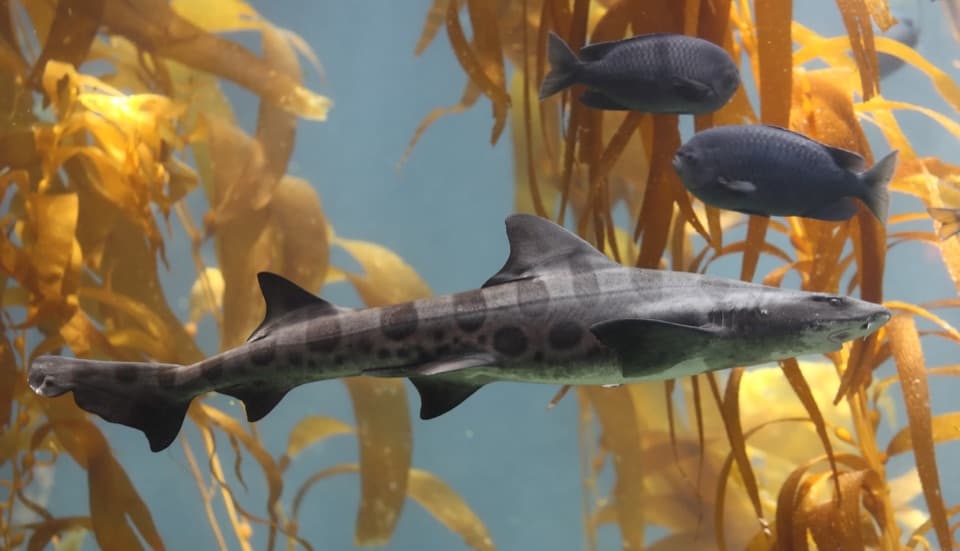
Photo: Matthew Field · CC BY-SA 3.0 · 1/3
Leopard Shark
Triakis semifasciata
Southern California's most recognizable and attractive inshore shark, covered in striking leopard-like black saddles and spots. Docile bottom feeders that put up a determined fight.
Monthly Seasonality & Run Timing
12-Month CalendarDeep water winter holding.
Cold water lull.
Slow.
Movement into warm inshore bays and surf shallows.
Peak spring pupping run into surf zone.
Excellent high-tide surf and T-end shark fishing.
Warm water feeding on crabs and squid.
Prime evening shark action across SoCal piers.
Consistent late-summer catches.
Fish begin moving to deeper outside water.
Cooling slows inshore runs.
Winter lull.
Feeds predominantly in the bottom habitat.
Active feeding thermal band in SoCal.
Peak bite frequency during tide movement.
Optimal lighting and foraging activity.
California Fish & Wildlife Regulations
36 inches minimum total length.
3 fish per day.
- 14 CCR § 28.40:View official California Department of Fish and Wildlife regulation ↗· reviewed 2026-08-28
OEHHA Southern California advisory: DO NOT EAT for women 18–45 and children 1–17 due to high mercury and PCB bioaccumulation in large predatory sharks.
Read official OEHHA Southern California advisory guidelines ↗Recommended Terminal Rigs for Leopard Shark
Tested terminal configurations, mainline, leader diameters, and hook sizes.
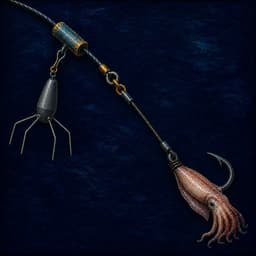
Heavy Slider Shark Rig
Sinker slide on heavy braid with coated wire leader to prevent bite-offs from rough skin and teeth.
Where to Fish for Leopard Shark in SoCal
3 Piers & Jetties in Pier Scout“Historic Berkeley shark-and-ray anglers fished cut bait or live bait over the mid-to-outer mud-bottom lane, with summer and fall noted as the stronger periods.”
“Historically a heavier-tackle outer-half fish, best approached with larger natural baits on the bottom when current and surf allow.”
“Heavier bottom rigs with cut bait at the inshore edge or outer end after surf settles; the local report notes occasional small sharks from the wharf.”