

Photo: Zack Abbey · CC BY 4.0 · 1/3
Barred Surfperch
Amphistichus argenteus
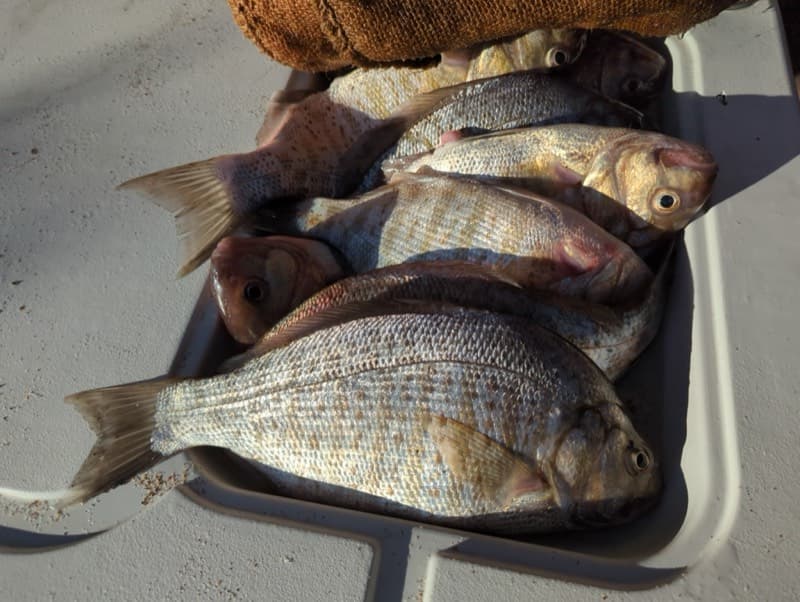
The staple year-round surf zone sportfish of Southern California piers. Oval, compressed silver bodies with distinctive bronze/yellow vertical bars across their flanks.
Monthly Seasonality & Run Timing
12-Month CalendarHeavy winter aggregations in surf troughs.
Large spawning females active in breaker zone.
Excellent winter/spring surfline action.
Consistent action on sand crabs and grubs.
Fish begin dispersing as surf temperatures rise.
Moderate action in early mornings.
Summer lull in shallowest surf; smaller schooling fish.
Smaller surfperch dominate in warm water.
Slow summer action.
Fall cooling brings larger adults back toward breakers.
Building toward winter peak.
Prime winter surf fishery begins.
Feeds predominantly in the bottom habitat.
Active feeding thermal band in SoCal.
Peak bite frequency during tide movement.
Optimal lighting and foraging activity.
California Fish & Wildlife Regulations
No minimum size limit (anglers typically practice catch-and-release on fish under 10 inches).
20 surfperch in combination, but not more than 10 of any one species (max 10 Barred Surfperch).
- 14 CCR § 28.59:View official California Department of Fish and Wildlife regulation ↗· reviewed 2026-08-28
OEHHA advisory south of Seal Beach: max 2 servings/week for women 18–45/children; 2 servings/week for women 45+/men.
Read official OEHHA Southern California advisory guidelines ↗Recommended Terminal Rigs for Barred Surfperch
Tested terminal configurations, mainline, leader diameters, and hook sizes.
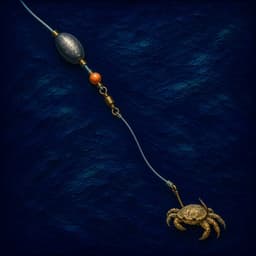
Carolina Sand Perch Rig
Light sliding sinker rig tailored for presenting live sand crabs in turbulent surf troughs.
Where to Fish for Barred Surfperch in SoCal
22 Piers & Jetties in Pier Scout“Small hooks with sand crabs, mussel, or worms along the inshore-to-mid-pier edges where the sandy bottom meets piling structure.”
“Sand crabs and fresh mussels are the classic baits here. The local report specifically documented productive nearshore surf fishing under the pier with those baits.”
“Sand crabs are the classic bait here; seaworms, mussel, and clam also fit the local surf-zone pattern near high tide.”
“Fish the surfline and shallow structure with sand crabs, mussels, or bloodworms; barred surfperch are a primary inshore target in local reports.”
“Fish sand crabs, bloodworms, mussels, clams, or shrimp on the bottom in the inshore surf zone; the local guide favors winter through early spring.”
“The local report recommends sand crabs, ghost shrimp, bloodworms, fresh mussels, or clams in the inshore surf zone.”
“The local pier report identifies barred surfperch in the inshore surf area; fish a small baited hook close to the sandy surf zone.”
“Use small hooks with sand crabs, mussel, or worms in the inshore wash; the local report identifies surfperch as a regular beach-side catch.”
“Fish sand crabs, mussel, or worms in the inshore wash; the local report names barred surfperch in the first quarter of the pier.”
“Sand crabs, bloodworms, or small mussel baits in the wash and alongside pilings.”
“Sand crabs, bloodworms, or small mussel baits in the surf wash and along the sandy bottom.”
“Historic report notes barred surfperch on the north/inshore side; use small hooks with suitable bait only after the pier reopens or from another legal location.”
“Sand crabs, mussels, ghost shrimp, or bloodworms near the shallow sandy surf edge.”
“Live sand crabs are the local report’s preferred bait; bloodworms, ghost shrimp, and fresh mussels also work in the surf line.”
“Sand crabs, bloodworms, mussel, or shrimp fished in the shallow wash near the base.”
“Fish sand crabs, bloodworms, fresh mussel, or ghost shrimp near the inshore sand and piling line. The local report says the inshore surfperch action is present but not especially strong, particularly compared with pelagics.”
“Sand crabs, pile worms, bloodworms, fresh mussel, or clam in the shallow surf area.”
“Mussels, sand crabs, or bloodworms on the ocean-side shallows and sand pockets.”
“Sand crabs, mussel or bloodworm baits fished in the inner sandy pockets.”
“Historic San Pedro Breakwater census work recorded barred surfperch. Sand crabs, mussel or bloodworm are conventional baits for lawful fishing around the beach-to-rock transition.”
“A local Corona del Mar jetty report documents perch. Use small hooks with natural bait near the beach-side rock/sand transition and stay out of the swimming area.”
“Sand crabs, mussel, or bloodworm baits along the beach-side sand/rock transition.”