

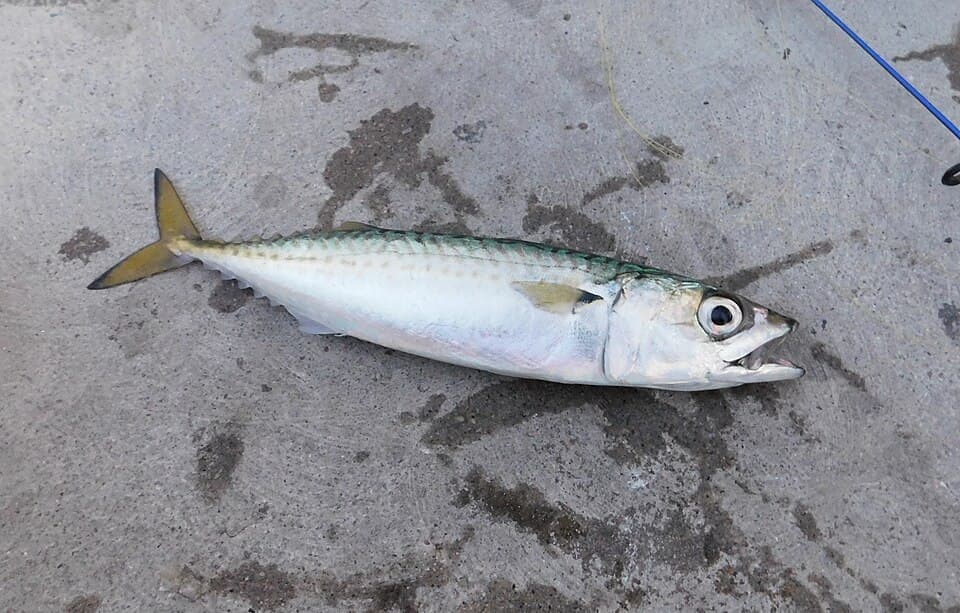
Photo: Ruff tuff cream puff · CC0 · 1/3
Pacific Chub Mackerel
Scomber japonicus
The ubiquitous, hard-fighting schooling pelagic that keeps pier rails buzzing all summer long. Critical as both fresh cut bait and sport.
Monthly Seasonality & Run Timing
12-Month CalendarIntermittent winter schools.
Slow winter.
Scattered schools.
Early spring schools appear on outer piers.
Building schools on afternoon tides.
Heavy summer runs; fast multi-hook Sabiki action.
Abundant across all deep-water SoCal pier platforms.
Peak summer action; prime baitfish and family sport.
Heavy feeding on minnow schools.
Aggressive autumn schools.
Schools thin out.
Winter lull.
Feeds predominantly in the midwater habitat.
Active feeding thermal band in SoCal.
Peak bite frequency during tide movement.
Optimal lighting and foraging activity.
California Fish & Wildlife Regulations
No minimum size limit.
No daily bag limit (exempt from general 20-finfish bag limit pursuant to 14 CCR § 27.60(b)).
- 14 CCR § 28.00:View official California Department of Fish and Wildlife regulation ↗· reviewed 2026-08-28
- 14 CCR § 27.60(b):View official California Department of Fish and Wildlife regulation ↗· reviewed 2026-08-28
OEHHA advisory south of Seal Beach: max 2 servings/week for women 18–45/children; 4 servings/week for women 45+/men.
Read official OEHHA Southern California advisory guidelines ↗Recommended Terminal Rigs for Pacific Chub Mackerel
Tested terminal configurations, mainline, leader diameters, and hook sizes.
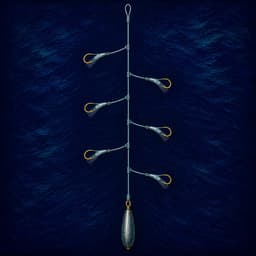
Sabiki Bait Rig / Mackerel Float
6-hook Sabiki rig with small foil flasher hooks or a single hook under a cigar float.
Where to Fish for Pacific Chub Mackerel in SoCal
31 Piers & Jetties in Pier Scout“Sabiki/multi-hook rigs or small strips of squid; schools move through unpredictably, good bait source for halibut too.”
“Sabiki or Lucky Lura-style bait rigs, small strips of squid, or small metals at mid-depth near the outer end when bait schools sweep through.”
“Sabiki-style bait rigs or small bait strips when schools move through; the local report specifically notes Pacific mackerel and jack mackerel as common live-bait and bucket-filling targets.”
“The outer public rail is the classic mackerel zone. The local report recommends Sabiki-style bait rigs or small bait strips worked through mid-depths when schools pin anchovies against the wharf.”
“Multi-hook bait rigs or Sabikis with tiny squid or bare hooks when schools swing through the outer half of the pier.”
“When schools show, fish a small multi-hook bait rig or strips of squid from the deeper outer-pier water; the later CDFW catch summary listed Pacific mackerel among the most common species.”
“Sabiki-style rigs or small bait strips around the outer rail when bait schools push through.”
“Small baited multi-hook rig or strip of squid through the water column, especially at the outer rail.”
“The end platform is the most reliable pelagic rail; use a Sabiki or small strip of squid/mackerel around bait schools and keep casts clear of diners.”
“Use a small high/low rig or bait-catching rig from the outer half when schools move through; a small piece of mackerel or other bait can help when fish are not striking bare lures.”
“Sabiki or similar multi-hook rig; small strips of squid or mackerel. The pier report identifies mackerel as the dominant catch and recommends the Monstad section, southwest corner, or end rail, especially early evening and at night.”
“The local report recommends Sabiki-style bait rigs from the end platform, or a squid strip and split shot during a light bite.”
“Use a small baited multi-hook rig or a small strip of squid through the water column at the end; the local report identifies the end as the pier's strongest mackerel area.”
“The pier operator and local report list mackerel as a catch; use a small bait rig/Sabiki only where it can be used safely and legally.”
“Sabiki or small strips of squid/mackerel around the outer wings when bait schools are present.”
“Use a Sabiki or small bait rig at the end, varying depth until a school is found; the local report places both species at the far end.”
“The outer rail is the reported pelagic zone. Use a Sabiki or a small bait strip around visible schools and avoid casting across other anglers' lines.”
“Sabiki rigs, small spoons, or anchovy/squid strips, especially at the outer end.”
“Sabiki or other small-feather rigs, small spoons, or squid strips; dawn, dusk, and evening are productive windows.”
“Historic pier report records mackerel among schooling fish around mid-pier; use a small baited multi-hook rig only when legal access returns.”
“Small multi-hook bait rigs, squid strips, or small lures when schools are present at the outer walkway/end.”
“The local report places mackerel in the upper water beyond the T; it suggests a lightly weighted baited hook or small high/low rig, subject to public-pier gear limits.”
“Small bait rigs, squid strips, or small spoons around schools; the local report records mackerel throughout the pier and especially toward the outer end.”
“Sabiki or small-feather rigs, spoons, or squid strips around the outer rail, especially dawn, dusk, or when bait schools show.”
“When schools are present, fish a multi-hook bait rig with small bait strips from the outer rail or along the pier; Pacific mackerel are specifically reported from the end and most pier areas.”
“Sabiki or small strips of squid through the water column; local reporting lists Pacific mackerel among the dominant catches.”
“Small Sabiki-style multi-hook rigs or strips of squid fished through the water column, especially near the outer rail; local reports call mackerel one of Goleta's dependable catches.”
“Small Sabiki or bait rigs when schools are present; the local report says mackerel are most consistent toward the historic outer end.”
“Sabiki or multi-hook bait rigs around the outer half when bait schools sweep the channel mouth.”
“Sabiki or small metal jigs when schools move through the entrance current.”
“Sabiki or small metal jigs when schools show; the outer head and open-water side are the most plausible passing-school zones.”