

Photo: RatioTile · CC BY-SA 4.0 · 1/3
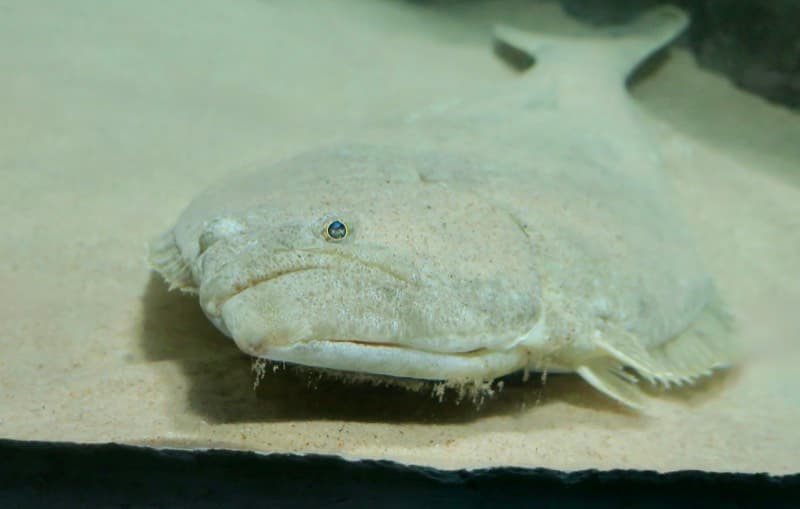
California Halibut
Paralichthys californicus
The premier flatfish prize of Southern California pier anglers. Large predatory ambush feeders with sharp teeth, large mouths, and eyes on either the left or right side of their flat bodies.
Monthly Seasonality & Run Timing
12-Month CalendarDeeper offshore winter holding; occasional flatfish on deep T-ends.
Slow winter bottom bite.
Early spring migration toward coastal shallows and bay mouths.
Inshore warming triggers aggressive feeding on grunion/anchovy.
Peak spring spawning run into surf troughs and mid-pier depressions.
Prime surf and T-end flatfish action.
High catch rates on live bait and swimbaits.
Warm summer water keeps halibut actively hunting bait schools.
Solid late-summer action on live anchovies and smelt.
Fall flatfish feeding before cooling waters trigger deeper movement.
Fish begin gradual move to deeper outside waters.
Winter lull.
Feeds predominantly in the bottom habitat.
Active feeding thermal band in SoCal.
Peak bite frequency during tide movement.
Optimal lighting and foraging activity.
California Fish & Wildlife Regulations
22 inches minimum total length (or 16 ½ inches alternate length measured from anterior edge of gill opening to tail tip).
5 fish per day south of Point Sur (Monterey County); 3 fish per day north of Point Sur.
- 14 CCR § 28.15:View official California Department of Fish and Wildlife regulation ↗· reviewed 2026-08-28
OEHHA advisory for coastal waters south of Seal Beach: max 1 serving/week for women 18–45 and children 1–17; 2 servings/week for women 45+ and men.
Read official OEHHA Southern California advisory guidelines ↗Recommended Terminal Rigs for California Halibut
Tested terminal configurations, mainline, leader diameters, and hook sizes.
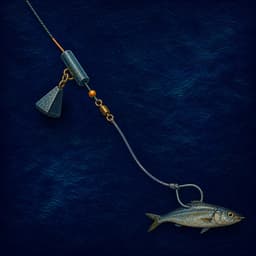
Sliding Sinker Live-Bait Rig (Halibut Slider)
Free-sliding pyramid sinker on main line allowing live anchovy, smelt, or sardine to swim naturally off the sand.
Drop-Shot / Swimbait Rig
3 to 4 inch soft plastic swimbait (calico/halibut pattern) bounced along the bottom.
Where to Fish for California Halibut in SoCal
38 Piers & Jetties in Pier Scout“Live bait (anchovy, smelt, small mackerel) fished near bottom, drifted with the current — best from the T-end where depth is greatest.”
“Work legal live bait or natural bait on the sandier west-side water from mid-pier outward, where the report shifts from rocks to sandy bottom.”
“Historic Berkeley regulars favored live shinerperch, jacksmelt, or anchovy around the outer flats near the end of the pier, especially on spring runs.”
“Live anchovy, smelt, sardine, or small mackerel near bottom from just outside the breakers to mid-wharf; artificials also work when bait is present.”
“Live anchovy, sardine, small mackerel, or other legal live bait fished near bottom around the mid-wharf rails or outer end, where the local report says halibut regularly use bait-rich water.”
“The local report puts halibut in the mid-shallow section and recommends live anchovy, small smelt, or other small live bait near bottom; grunion runs at the beach can improve the shallow bite.”
“Best targeted from the outer end with live bait, anchovy strips, or other natural baits worked close to the sandy bottom.”
“The local report says better-quality halibut catches usually come from anglers who know the deeper water and techniques; fish legal live bait or natural bait close to bottom toward the deepest accessible outer sections.”
“Fish the far end on bottom with a live-bait leader or larger plastic grub; local reporting ties the best halibut window to late spring and early summer.”
“Live anchovy/smelt where legally obtained, or squid/natural bait fished near the sandy bottom and piling depressions.”
“Present a live anchovy, smelt, perch, sardine, or mackerel close to the bottom in mid-pier piling depressions.”
“Fish a live smelt, small sardine, queenfish, or small mackerel near the sandy bottom from mid-pier; the local guide suggests whole or cut anchovy when live bait is unavailable.”
“Live smelt, shinerperch, sardine, or baby mackerel on a Carolina/slider-style bottom rig; the Monstad mid-depth rail is the local report's best-known area.”
“The local report recommends a live-bait presentation in mid-pier water and at the reported reef gap; use only legal gear and verify current rules.”
“Fish a legal live bait or a natural-bait rig near the sandy bottom in the mid-pier water; local reporting calls this the usual best section for halibut.”
“The Malibu Pier report describes halibut fishing from mid-pier outward; fish a bait or lure near the bottom where access is open.”
“Live anchovy, smelt, sardine or mackerel fished close to the bottom around the mid-pier piling depressions.”
“Fish a lawful live bait or an artificial close to the bottom in the mid-pier area; the local pier report calls the middle the best halibut water.”
“Fish a legal live bait or other bottom presentation just past the surf zone through mid-pier, the area identified in the local report as best for halibut.”
“Live smelt/anchovy or a strip of mackerel fished near bottom around piling depressions.”
“Live anchovy, smelt, or a strip of mackerel fished close to bottom around piling depressions.”
“Historic report describes halibut at the outer end and around mid-pier piling depressions; use legal live or artificial bait only after legal access returns.”
“Live or cut bait worked close to the sandy bottom; the local report specifically favors a live-bait/Carolina-style approach from the south side.”
“Pier Fishing in California identifies the sand between eelgrass and pier as a halibut area; fish a legal live bait on a Carolina-style bottom leader there or from the end.”
“The local report favors live small queenfish, white croaker, or smelt, or a moving baitfish-style lure, worked near bottom around the mid-pier approach.”
“Live anchovy, smelt, sardine, or a strip of mackerel fished near bottom around mid-pier pilings and the lit end well.”
“The local report identifies the mid-pier-to-end piling depressions as the main halibut area; fish a small live smelt, shinerperch, queenfish, or sardine close to bottom where legal and available.”
“Live anchovy, smelt or small mackerel on a legal bottom rig; the local report says halibut remain available at the outer end despite lost mid-wharf access.”
“Fish a legal live bait or natural-bait rig close to the sandy bottom, concentrating on the deeper outer and mid-pier water and current seams.”
“Live or fresh bait fished near the bottom; the local report identifies the sandy outer-surf to mid-pier area as the historical halibut zone.”
“Live smelt/anchovy or small swimbaits along the inner shelf and the outer tip current seam.”
“Live smelt/anchovy, small swimbaits or a drifted baitfish along the sand-rock edge and current seam.”
“Live anchovy, smelt or small swimbaits worked along the channel seam and outer head; retrieve above the rocks to reduce snags.”
“The adjacent Cabrillo Pier fishery reports halibut over its sandy/soft bottom. A lawful vessel approach would use a live bait, squid strip or small swimbait along sand beside, not over, the rock toe.”
“Live smelt/sardine, squid strip or a small swimbait along the sandy pocket and harbor-side edge; let the bait reach bottom before a slow retrieve.”
“No bait recommendation is supplied because fishing on this jetty is prohibited. The regulation is retained only as nearby-coast reference information.”
“Live smelt or anchovy, squid strip or a small swimbait along the sandy harbor-side edge and entrance current.”
“Live smelt/anchovy or a small swimbait drifted across sandy pockets at the river-mouth end.”